
Expanding How We Understand Health & Human Experience
A Coherence-Centered perspective for exploring the relationships that shape health, experience, and change.
What Might Become Visible When We Understand Differently?

About Transcendent Well-Being™
Expanding Our Capacity to Observe, Inquire, and Understand
Transcendent Well-Being is an educational organization and evolving learning ecosystem dedicated to expanding how we understand ourselves, our experiences, and the world around us.
What we understand influences what we are able to notice, the questions we think to ask, the choices we consider, and how we respond to what is happening within and around us.
Transcendent Well-Being provides an educational home for frameworks, learning experiences, collaborations, and continuing inquiry grounded in a Quantum-Informed and Coherence-Centered understanding of health and human experience.
My Vision
I envision a world in which we collectively contribute to an expanding understanding of what it means to be human and the many relationships that shape our health and the lives we create through these experiences.
A quantum-informed and coherence-centered perspective invites us to consider health within the larger context of our lived experience, including how we live, relate, work, create, adapt, make meaning, and participate in the world around us.
Through Transcendent Well-Being, my work brings together different perspectives, lived experiences, and forms of knowledge to explore connections and patterns, while distinguishing what is known and supported by evidence from what is still being explored or remains open to inquiry.
Learning Through Transcendent Well-Being
Transcendent Well-Being creates educational experiences that invite us to expand how we understand health and human experience, notice relationships and patterns we may not have considered, ask different questions, and explore what may become possible from there.
Learning may begin with something we are already experiencing, observing, or curious about. Through education, conversation, reflection, shared inquiry, and experiential learning, we consider different perspectives, forms of knowledge, and lived experience within a broader context.
As understanding expands, we may discover new ways of observing, inquiring, participating, and bringing what we are learning into our lives and work.
-
People may enter Transcendent Well-Being (TWB) from different areas of life and work and may participate in more than one way.
For your own health and life, TWB offers opportunities to develop a broader understanding of your experiences, relationships, patterns, and the ways you participate in your health and life.
For health care and integrative practice, TWB offers health care providers and integrative practitioners opportunities to expand the lens through which they understand health, healing, human variability, and the person experiencing them, and to explore how a coherence-centered perspective may inform their existing knowledge, practice, education, and approach to care.
For education and organizations, TWB offers opportunities to expand the perspectives through which people teach, learn, lead, and understand the individuals and communities they serve. Educational and organizational experiences can explore how relationships, patterns, context, and participation may contribute to learning, professional well-being, organizational coherence, and the environments we create together.
For interdisciplinary and collaborative work, TWB creates opportunities for different areas of expertise, research, practice, education, technology, creativity, and lived experience to intersect and inform one another through shared inquiry, educational initiatives, research, conversations, workshops, and emerging collaborations.
These pathways can overlap and evolve. A health care provider may also be an educator, organizational leader, researcher, or collaborator, while an individual inquiry may grow into professional learning or collaborative work. Transcendent Well-Being provides a shared educational context where different interests and perspectives can come together, deepen understanding, and open new possibilities.
-
Health is one place our inquiry may begin. Something we notice through our health may lead us to recognize relationships with chronic stress and adaptation, our relationships, our work, the ways we care for others, the choices we make, or how we respond to change.
Quantum Integrative Health™ (QIH) is a coherence-centered, quantum-informed educational framework for expanding how we understand health and the person experiencing it. It provides one way of beginning this inquiry by considering health within the larger context of human experience.
As what we recognize through health extends into other areas of our lives, Coherence-Centered Living carries this inquiry into how we live, relate, create, adapt, make choices, and participate in what comes next.
→ Explore Quantum Integrative Health™
→ Explore Coherence-Centered Living
An Invitation to Inquiry
Inquiry may begin with our health, a relationship, our work, a period of change, something we are creating, or simply something we have begun to notice or question.
We can begin with what we are experiencing, what we already understand, and what we are curious to explore.
What might become visible when we understand differently?
Transcendent Well-Being is a place for continuing that inquiry and exploring what may become possible as understanding expands.

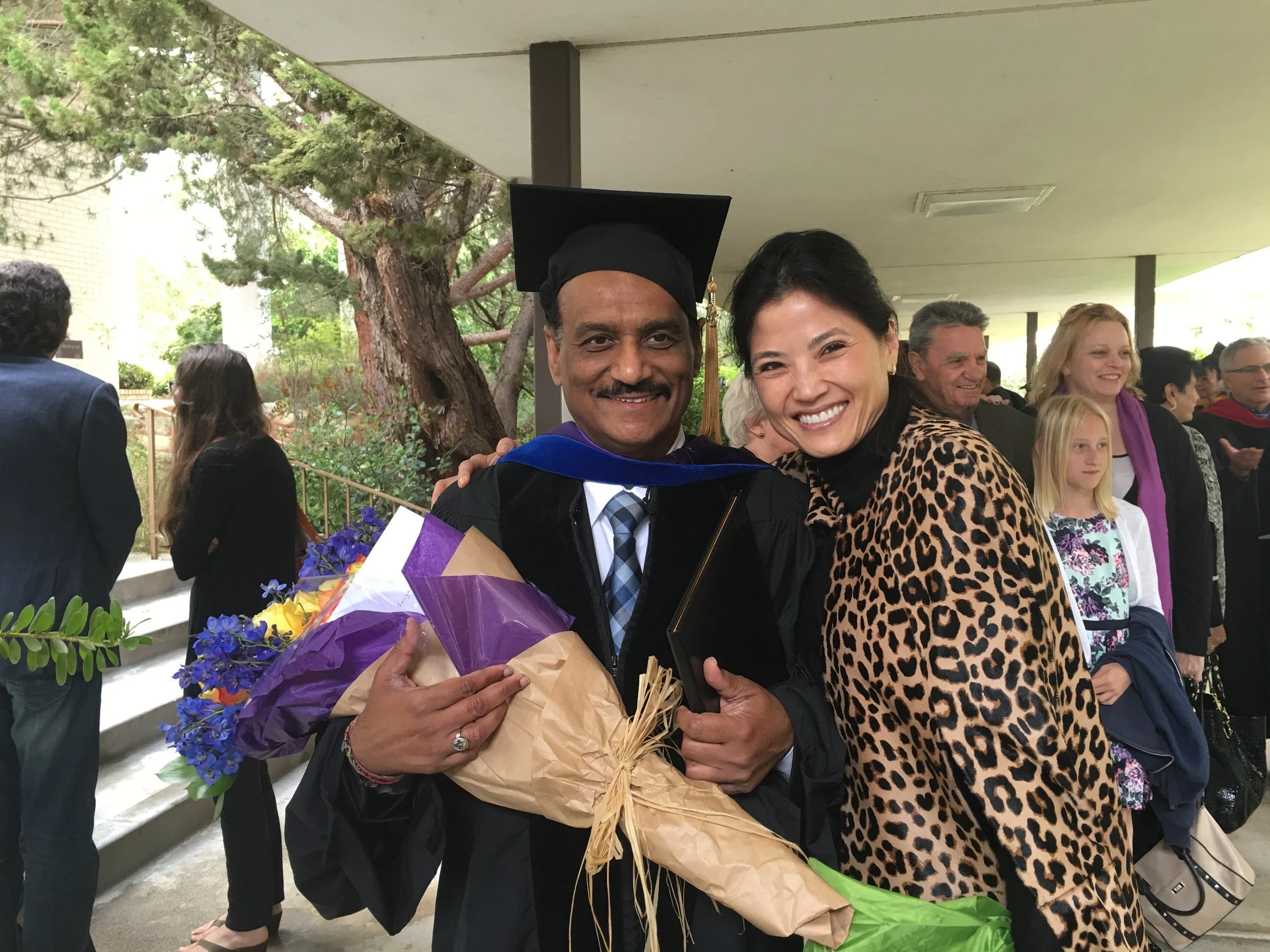
Meet Dr. Roberta Kung
Roberta Kung, M.D., is a board-certified anesthesiologist, physician educator, interdisciplinary researcher, founder of Transcendent Well-Being™, and developer of Quantum Integrative Health™.
Her work has developed through more than three decades in medicine and a continuing inquiry into health, pain, human variability, lived experience, and the perspectives through which we understand them.
Throughout her clinical career, Dr. Kung observed that people with similar diagnoses, clinical findings, and treatments could experience pain and respond to care very differently. These observations raised questions that gradually extended beyond any single way of understanding health.
Pursuing doctoral studies in Integrative Medicine gave Dr. Kung an opportunity to investigate these questions across disciplines and to explore how different forms of knowledge, observation, and lived experience might contribute to a broader understanding of health and human experience.
Her doctoral research became the foundation for Quantum Integrative Health, a Coherence-Centered, Quantum-Informed educational framework for expanding what we are able to observe, inquire about, and understand.
Today, Dr. Kung brings her medical foundation, interdisciplinary research, lived experience, and continuing inquiry into her work as a physician educator through Transcendent Well-Being.
-
Dr. Kung entered the six-year medical program at the University of Missouri–Kansas City directly after high school and received her medical degree at age 23. She completed her anesthesiology residency at the University of Southern California and Los Angeles General Medical Center.
A board-certified anesthesiologist, she practiced at Cedars-Sinai Medical Center before moving into independent private practice in Beverly Hills, California. More than three decades in medicine provided a foundation in physiology, clinical observation, diagnosis, treatment, evidence, professional responsibility, and the variability of human responses to illness and care.
Her doctoral studies in Integrative Medicine through the International Quantum University for Integrative Medicine broadened the context of her medical education to include integrative health, chronic stress and adaptation, living systems, consciousness, philosophies of health and healing, and quantum science.
Her dissertation, Quantum Integrative Health™: A Coherence-Centered Framework for Understanding Pain as a Field of Potential Within Human Experience, integrated these areas of inquiry through an in-depth study of pain within the broader context of human experience.
Central to the research was a participatory qualitative inquiry that examined how people described, interpreted, and engaged with their experiences over time. This allowed lived experience to become a systematic source of observation and inquiry alongside the interdisciplinary literature informing the research.
The work became the foundation for the continuing development of Quantum Integrative Health.
From Physician to Physician Educator
My clinical experience and doctoral research changed more than how I thought about health. They changed what I wanted to do with what I was learning.
I became increasingly interested in how education could create opportunities for people to consider something they may not have considered before, bring different perspectives into conversation, and ask questions that might lead somewhere new.
Today, I bring my experience in medicine, interdisciplinary research, and lived experience into educational work with individuals, health care professionals, educators, and organizations through Transcendent Well-Being™ and Quantum Integrative Health™.
How might a deeper understanding of ourselves and the patterns and relationships in our lives shape how we care for ourselves and others—and how that caring changes across our lives?

Quantum Integrative Health™
Expanding How We Understand Health and Human Experience
Quantum Integrative Health™ (QIH) is a Coherence-Centered, Quantum-Informed educational framework for expanding how we understand health and the person experiencing it.
QIH brings clinical information, lived experience, relationships, context, and individual variability into a broader field of understanding.
Understanding and Observation
What we understand influences what we are able to observe, while what we observe can expand how we understand.
QIH brings this perspective to health by considering symptoms, diagnoses, laboratory findings, imaging, and other clinical information within the larger context of the person and their lived experience.
As relationships and patterns become more visible, they can deepen understanding, generate new questions, and inform how we participate in health and care.
Curious about what might become visible when we look at health, work, relationships, or education from a different perspective?
→ Begin a Conversation About What We Might See Differently
From a Quantum-Informed Worldview to a Coherence-Centered Perspective
A Quantum-Informed Worldview broadens the context in which we understand health and human experience, bringing attention to relationships, context, change, uncertainty, observation, and perspective.
It recognizes that a change in one aspect of a dynamic system can change its relationships with other aspects and influence the organization of the whole. It also acknowledges the limits of what we currently understand.
Within this broader worldview, a Coherence-Centered perspective explores how these relationships and patterns come together within the person and how they may reorganize and change over time.
Expanding What It Means to Be Integrative
Integrative health brings different approaches, disciplines, and perspectives into our understanding of health and care. From a coherence-centered perspective, integration also includes considering more of the person and the life in which health is being experienced.
Physiology, symptoms, diagnoses, clinical findings, treatment, and established scientific knowledge all contribute important information. Our understanding can also include relationships, stress and adaptation, thoughts and emotions, behavior, environment, responsibilities, lived experience, meaning, individual differences, and change over time.
Looking across these different dimensions may reveal relationships and patterns that are less visible when considered separately.
Integration becomes an ongoing process of recognizing how different forms of information, knowledge, perspective, and experience are dynamically interconnected—and how change in one area may influence others, creating shifts and possibilities that cannot always be predicted in advance.
How Quantum Integrative Health May Relate to You
Quantum Integrative Health grew from questions I could not fully answer through any one way of understanding health.
As a physician, I observed how differently people could experience pain, even with similar diagnoses or clinical findings. Through my own experiences with chronic illness and pain, I found myself asking many of the same questions.
What am I missing?
QIH creates a broader context for exploring what we may not yet be seeing or understanding.
Where that inquiry begins may differ, but the underlying orientation is the same: to expand what we are able to observe, explore relationships among different aspects of an experience, and remain open to how changes in those relationships may alter what becomes possible.
Within QIH, coherence refers to how these different aspects of a person and their experience relate, influence one another, and organize together as a whole, and how that organization can change over time. A Coherence-Centered perspective brings those relationships and changes into greater view.
This inquiry may begin with our own health and life, with the experience of caring for another person, or with questions and possibilities emerging within a profession, community, or organization.
-
For an individual, integration can begin by exploring how what we know about our health relates to what we are actually experiencing.
Laboratory results, imaging, diagnoses, and other clinical information may tell us something important about our health. Symptoms, relationships, stress and adaptation, responsibilities, environment, behavior, and lived experience provide additional information.
Exploring these together may reveal relationships and patterns that were less visible when considered separately. It may also help us recognize how changes in one area of our lives can influence others in ways we had not anticipated.
A broader understanding can help us ask different questions, recognize additional possibilities, and participate more fully in decisions about our health and lives.
As what we recognize through health extends into other areas of life, Coherence-Centered Living offers a way to continue exploring how we live, relate, create, adapt, choose, and participate.
-
For health care providers, professionals, family members, and other caregivers, integration also includes recognizing ourselves as part of the experience of caring for another person.
What we know professionally, what another person tells us about their lived experience, the context in which care occurs, and what we ourselves bring to the relationship can all influence what we are able to observe and understand.
Greater awareness of these relationships can strengthen discernment about what we know, what we are observing, what we may be assuming, and what else may need to be considered.
It can also make more visible how the experience of caring affects both the person receiving care and the person providing it. Changes in workload, stress, relationships, expectations, support, or our own capacity may influence how we listen, interpret, respond, and participate in care.
This broader understanding can help us recognize what the person may need, when another perspective or form of support may be relevant, and what we ourselves may need in order to care for others well.
-
For education, interdisciplinary collaboration, communities, and organizations, integration includes exploring how different perspectives, areas of expertise, experiences, and forms of knowledge relate to and influence one another within a larger shared context.
QIH provides a foundation for education and interdisciplinary collaboration that builds on existing knowledge while exploring how different perspectives are interconnected, dynamically related, and mutually informing.
As people contribute new observations, experiences, questions, and knowledge, collective understanding can evolve. That evolving understanding may, in turn, change what the community is able to observe, the questions it asks, and the possibilities it can imagine or create.
In this way, learning is not simply additive. New understanding can change how existing knowledge is interpreted and how people relate, collaborate, and participate within the whole.
This ongoing process can support greater understanding, alignment, and coherence as people learn, work, and create together.
An Evolving Framework
As knowledge, evidence, experience, and observation continue to develop, they may expand what we understand, reveal relationships we had not previously recognized, and generate new questions for inquiry.
QIH builds on what we currently know and what evidence supports while remaining open to what further observation, research, experience, and interdisciplinary inquiry may help us understand. Its development reflects the same orientation QIH brings to health and human experience: understanding can evolve, relationships can change, and new possibilities may become visible as we learn.
Begin the Conversation
The 30-Minute Introductory Conversation is an opportunity to explore how Quantum Integrative Health may relate to your interests, questions, professional work, educational goals, or organization.

Quantum Integrative Health™ for Health Care Providers
Expanding What Expertise Makes Possible to Observe
Every health care provider has cared for people who appear similar on paper yet have very different experiences. People with similar diagnoses and treatments may respond differently, recover at different rates, or experience symptoms and changes that unfold in very different ways.
Quantum Integrative Health (QIH) offers health care providers a broader context for exploring these differences and understanding the person experiencing them.
QIH begins with the knowledge, training, clinical experience, and professional judgment providers already bring to care. Medical and professional education develop highly specialized capacities to recognize patterns, distinguish clinically meaningful findings, evaluate risk, identify disease, and determine appropriate pathways for care.
A Coherence-Centered perspective expands what that expertise may make possible to observe when clinical knowledge is considered alongside additional information about the person and the context in which health is being experienced.
Understanding Influences What We Know to Look For
What we learn influences what we know to look for, what we recognize as significant, the questions we think to ask, and how we interpret what we observe.
This is one of the ways expertise matters.
A physician, nurse, psychologist, physical therapist, integrative practitioner, or other health professional may each recognize dimensions of a person's health experience that become visible through their particular education, training, and experience.
QIH adds an epistemic and relational dimension to professional learning by bringing attention to what our knowledge makes possible to observe, how different forms of expertise expand observation, and what may become visible when additional perspectives, relationships, and context are considered.
QIH creates an educational context for bringing these forms of information into relationship with discernment—considering what is known, what evidence supports, what professional training allows us to establish, what the person is experiencing, what relationships may be relevant, and what remains open to further inquiry.
→ Explore Understanding, Observation, and Professional Expertise
Expanding the Context Through Which We Care
Understanding a person's health experience can include symptoms, diagnoses, clinical findings, treatment, and established scientific knowledge together with relationships, stress and adaptation, behavior, environment, responsibilities, lived experience, meaning, individual variability, and change over time.
A Coherence-Centered perspective expands the field of observation by bringing these dimensions into a larger context.
This can help providers discern which relationships may be clinically or experientially meaningful, what additional information may deepen understanding, where their expertise may contribute most, and when another perspective or form of support may add value.
The result is an expanded field of inquiry in which professional expertise remains central while additional relationships and context become available for observation.
-
Medical, psychological, rehabilitative, integrative, nursing, and other professional perspectives may each make something different available for observation and understanding.
A Coherence-Centered approach to interdisciplinary care recognizes that the value of multiple perspectives lies not only in their presence, but in how they inform one another and contribute to a more coherent understanding of the person.
Different forms of expertise can therefore become mutually informative while retaining their distinct knowledge base, evidentiary standards, professional responsibilities, and scope of practice.
This creates opportunities for reciprocal referrals, professional consultation, interdisciplinary conversations, provider education, shared learning, and emerging collaborations.
-
The person experiencing health brings a form of knowledge that is essential to understanding their experience.
Individuals may notice how symptoms feel and change over time, what occurs in different environments or circumstances, and how their health relates to sleep, stress, activity, treatment, relationships, responsibilities, behavior, and other aspects of everyday life.
Providers bring clinical knowledge, expertise, observation, discernment, and professional responsibility.
Individuals bring knowledge of their lived experience and an expanding capacity to observe, describe, and communicate what they are experiencing.
Participatory care develops as these different forms of knowledge inform one another.
This creates a richer foundation for shared understanding, communication, decision-making, and ongoing care.
-
Health education can expand both knowledge and observational capacity through developing the observer.
As people gain new ways of understanding their health and experience, they may become better able to notice meaningful patterns and changes, recognize relationships among different aspects of their health and lives, describe what they are experiencing more clearly, ask more informed questions, and participate more fully in decisions about their health and care.
This expanded capacity to observe and communicate can also give providers access to information that deepens understanding and supports more informed, participatory care.
Provider education through QIH can explore ways of helping patients and clients strengthen this capacity while remaining grounded in the provider's professional role and scope.
→ Explore Developing the Observer in Patient and Client Education
-
A coherence-centered perspective also expands the field of observation to include the provider within the experience of care.
Health care professionals practice within relationships, teams, organizations, systems, and changing conditions.
Workload, responsibility, emotional demands, organizational culture, resources, relationships, expectations, time pressures, and personal capacity can influence how providers listen, interpret, respond, make decisions, and experience their own health and well-being.
Greater awareness of the provider's own context can strengthen professional discernment, self-understanding, communication, relationships, and sustainable participation in care.
Coherence-Centered Living extends this inquiry into how providers care for themselves and others, work, relate, adapt, make choices, and participate in their lives.
Learning and Collaboration for Health Care Providers
QIH creates a learning environment in which expertise becomes a foundation for expanded observation, deeper inquiry, and interdisciplinary learning.
Educational experiences may begin with a clinical observation, an area of professional interest, something a team or organization is seeking to understand, or an opportunity to explore how different forms of knowledge and experience may contribute to a broader understanding.
QIH can be explored through professional education, organizational learning, interdisciplinary inquiry, consultation, workshops, and emerging collaborations.
Coherence-Centered Living
How an Inquiry Into Health Became a Way of Living
My inquiry into health gradually became an inquiry into my life.
I began to recognize connections among my health, years of responsibility and caring for others, achievement, stress, adaptation, relationships, expectations, and the ways I had learned to keep going.
As my understanding expanded, the questions I was asking changed. Eventually, so did the way I thought about health, care, and how I was living.
When Understanding Changes What Becomes Visible
A symptom or diagnosis tells us something important. But I became curious about what else might be relevant: relationships, environment, responsibilities, stress, activity, treatment, and what was happening in everyday life.
Considering these together brought connections into view that I had not recognized when I thought about them separately.
-
What we know influences what we notice and the questions we think to ask. As my perspective on health expanded, connections I had not previously recognized became more visible.
This became part of the coherence-centered perspective that developed through my doctoral research and Quantum Integrative Health™, a Quantum-Informed educational framework for expanding how we understand health and the person experiencing it.
What Becomes Visible When We See the Relationships Among Our Experiences
Looking at my own life this way changed what I could see.
Responsibility, caring, achievement, expectations, identity, stress, and adaptation were not separate parts of my life. They had developed together and influenced one another over time. Caring for others shaped how I used my energy and took on responsibility. Expectations influenced what I worked toward and how I measured myself. And the ways I adapted to stress became woven into how I learned to live, care, achieve, and keep going.
Recognizing these relationships became an important part of my larger journey. What began as an effort to understand my health differently gradually changed how I understood my life—what had shaped me, how I had learned to respond, what I wanted to carry forward, and what I might now choose differently.
-
▸ Context Can Change What Becomes Meaningful
Something can look different when we understand the circumstances in which it developed. A way of responding that once helped us care for others, meet expectations, adapt, or move through a demanding period of life may affect us differently as our circumstances and needs change.
Seeing these relationships within their larger context changed what became visible to me. It also opened a larger question: If I could understand my life differently, what else might become possible in how I live it?
When Possibilities Expand, Participation Becomes Visible
As more of the relationships among our experiences become visible, we have more to work with. We may begin to see choices we had not considered, ask different questions, approach familiar situations differently, or recognize possibilities that were difficult to see before.
This also expands what participation can mean. We participate through what we choose to learn and question, how we care for our health, the conversations we have, the relationships we shape, the work we do, what we create, and what we contribute.
And because our lives are lived in relationship with other people, our participation extends beyond our own experience. What one person notices, understands, questions, or shares can influence what becomes visible to someone else. Bringing different experiences and perspectives into conversation can change what we understand together and open possibilities that may not have emerged otherwise.
Continuing the Inquiry
I am bringing these conversations together with people who are curious about their own lives and what comes next, how we understand health, and what we might discover when different perspectives and areas of knowledge come into relationship.
If something here connects with a question you are asking or a conversation you would like to be part of, I would love to hear from you.